Why Sensitive Children Become Overwhelmed in Crowded Places
Some children seem unusually affected by crowded spaces — theme parks, grocery stores, busy family gatherings, school hallways at dismissal. They slow down when everyone else speeds up. They get quiet when the noise gets loud. Or in the opposite direction, they come completely unglued in a way that seems disproportionate to what's actually happening.
If you've seen this in your child, you're not imagining it. And it probably doesn't look the way you'd expect.
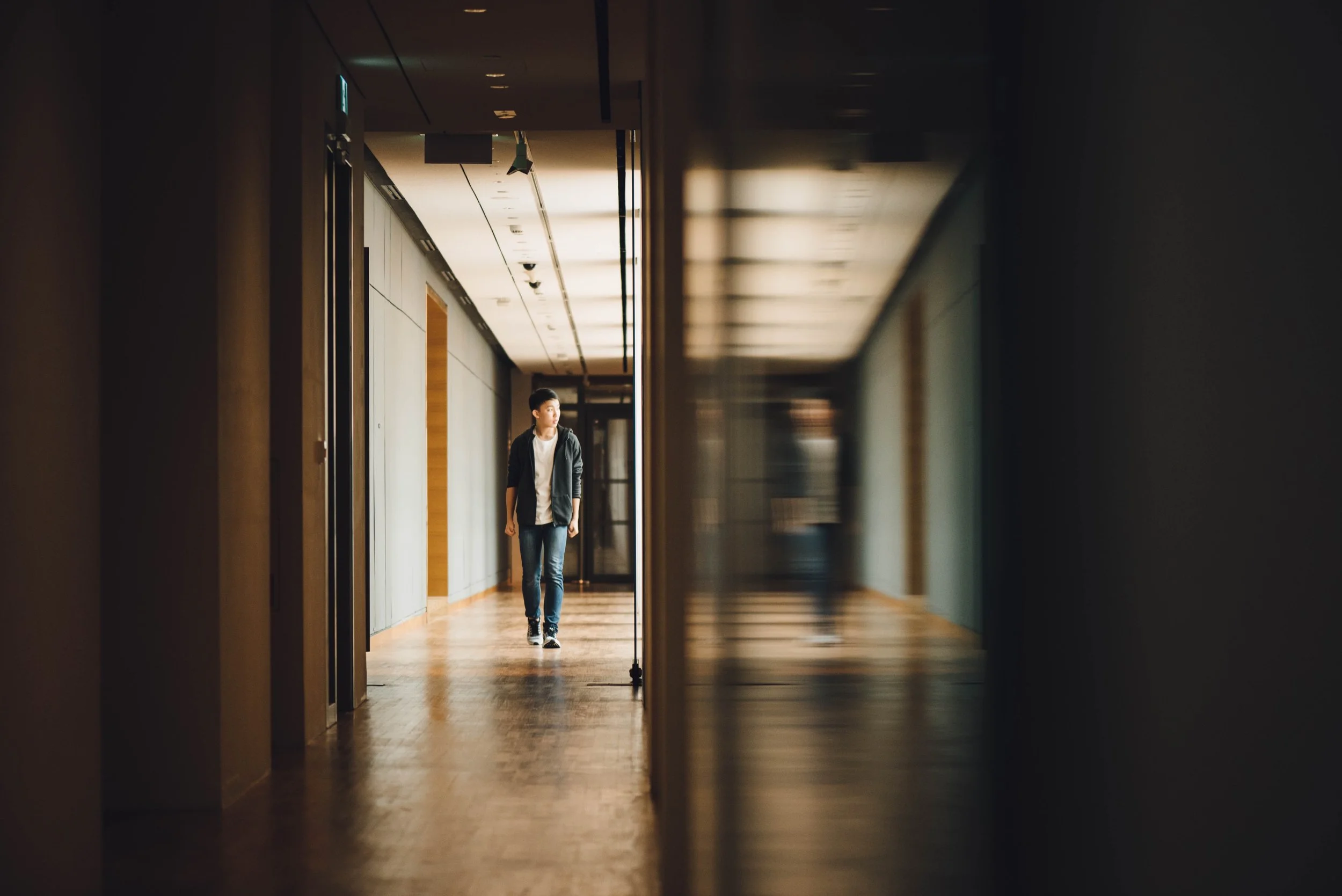
Some children seem unusually aware of the emotional atmosphere around them. Helping them understand and regulate that sensitivity is often more important than immediately deciding what causes it.
We have two kids, and they respond to sensory and emotional overload in completely opposite ways, which taught us something useful early on. Our daughter gets quiet. She slows down, zones out, and goes somewhere internal. You'll notice the thousand-yard stare before anything else. Questions land slowly. She starts to drift behind you, looking for a leg to stand behind or a quieter corner to retreat to, and eventually there's a gentle tug on the sleeve and a whispered request to leave.
Our son does the opposite. As the energy in a space climbs, so does he. He gets louder, less coordinated, increasingly unhinged, and eventually completely feral in a way that makes you wonder what happened to the child you arrived with. Both kids are doing the same thing: integrating more input than they can comfortably process. They've just inherited different coping styles.
What's Actually Happening Underneath
What's happening in sensitive and intuitive children isn't just sensory overwhelm in the traditional sense. Crowded spaces mean more people, more emotions, more noise, and children who are naturally attuned to the emotional environment around them are picking up more than others do. They're not just hearing the volume. They're absorbing the tension in a room, the anxiety of a stranger nearby, the emotional undercurrent of a space. Most of the time they can't articulate any of this. They just know they feel bad and they want to leave.
This doesn't look dramatic from the outside, and that's worth saying plainly. In a grocery store or at a birthday party, it looks like a kid having a hard time. It looks like fatigue, or shyness, or a behavior issue. It usually isn't any of those things.
What Helps in the Moment
What helps is fairly practical, and it doesn't require your child to be labeled or diagnosed with anything. Recognizing the early signs, the stare, the retreat, the escalating energy, before the situation reaches a breaking point gives you room to respond rather than react. Stepping outside, finding a quieter space, giving them something to focus on, and letting them decompress without pressure to immediately re-engage are all things that work. Naming what's happening calmly and without alarm also helps more than most parents expect: "You picked up a lot in there. Let's give you a minute."
That kind of language does two things. It validates what your child is experiencing without making it into a crisis, and it starts to build their own vocabulary for what's happening to them, so that as they get older they can begin to recognize and manage it themselves rather than needing a parent to intervene every time.
Both of our kids, the one who goes silent and the one who goes feral, need the same basic cool-down after a difficult environment: space, quiet, and time to come back to themselves before being asked to perform normally again. Once they have that, they're usually fine. The goal was never to stop taking them to crowded places. It was to give them the tools to handle those places, and eventually use those tools themselves.
Looking for More Support?
The Raising Psychic Children course was created for parents navigating intuition, emotional sensitivity, spiritual experiences, and the uncertainty that often comes with them.
Related reading: My Child Sees Spirits and Is Scared. What Should I Do?
Disclaimer: This article is intended for educational purposes and reflects experiences commonly reported by families raising intuitive children. It is not a diagnosis or substitute for professional medical or mental health care.